

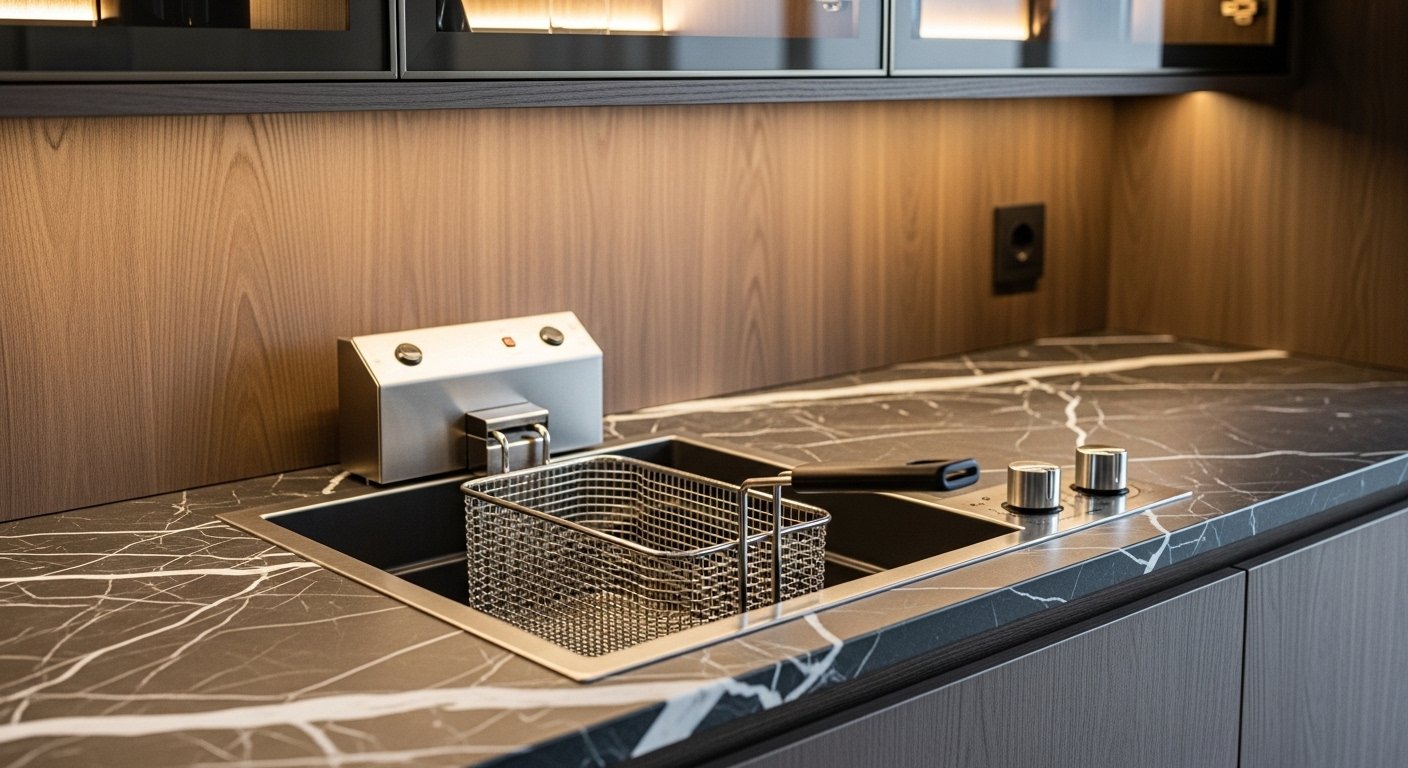
Price Guide for Built-in Deep Fryers
Understanding the built-in deep fryer price landscape is essential before making a purchase decision. Unlike small countertop appliances, built-in fryers are long-term kitchen investments that combine performance, design integration, and durability. Their pricing varies significantly depending on features, build quality, and brand positioning, which makes a structured evaluation necessary rather than relying on assumptions.
In modern kitchens, especially in urban Pakistan where built-in appliances are becoming standard, buyers are not just comparing costs—they are assessing value. The cost of indoor fryer units must be analyzed in relation to performance, energy efficiency, maintenance requirements, and lifespan. A lower upfront cost does not always translate into savings, just as a higher price does not automatically guarantee superior performance.
This guide breaks down the pricing structure of built-in deep fryers, explains what influences cost, and helps you determine how much you should realistically pay based on your needs.
Factors Affecting Price
The price of a built-in deep fryer is not arbitrary; it is determined by a combination of technical, material, and functional variables. Understanding these variables allows buyers to identify where their money is actually being spent.
One of the most significant factors is build quality. Fryers constructed with high-grade stainless steel and heat-resistant components typically fall into a higher price bracket. These materials enhance durability and ensure the appliance can withstand prolonged exposure to heat and oil without degradation.
Another major factor is temperature control technology. Basic models rely on mechanical thermostats, while advanced units offer digital precision control. This difference directly affects cooking consistency, which is why models with accurate temperature regulation often command a higher electric fryer price.
Oil capacity also influences cost. Larger fryers designed for heavy usage require more robust internal components, which increases manufacturing costs. For households with frequent frying needs, this added capacity can justify the higher price.
Filtration systems are another price determinant. Built-in oil filtration mechanisms extend oil life and improve cooking quality. Fryers equipped with these systems are positioned in the mid to premium range due to their added convenience and efficiency.
Safety features such as automatic shut-off, overheating protection, and secure locking systems also contribute to pricing. These features are essential for safe operation and are often standard in higher-end models.
Finally, design and integration play a role. A fryer that integrates seamlessly into a modern kitchen layout with a premium finish will typically cost more than a basic model with minimal design considerations.
How Much Does a Built-in Deep Fryer Cost?
The price of built-in deep fryer units can vary widely depending on the category. Entry-level models generally fall into a more accessible range, offering basic functionality suitable for occasional use.
Mid-range models are the most popular choice, balancing performance and affordability. These fryers include improved temperature control, better materials, and moderate oil capacity, making them ideal for regular household use.
Premium models sit at the top of the pricing spectrum. They offer advanced features such as digital controls, integrated filtration systems, and enhanced safety mechanisms. These units are designed for users who prioritize performance, durability, and convenience.
In practical terms, buyers should expect a noticeable price gap between these categories. Understanding this range helps set realistic expectations and prevents overpaying for unnecessary features.
Affordable vs Premium Models
The distinction between affordable and premium fryers is not just about price—it reflects differences in performance, longevity, and user experience.
Affordable models focus on essential functionality. They are designed for users who require basic frying capabilities without advanced features. While they are cost-effective, they may lack durability and precision, which can affect long-term performance.
Premium models, on the other hand, are engineered for consistent, high-quality results. They offer superior temperature control, faster heating, and enhanced safety features. These advantages make them suitable for frequent use and demanding cooking environments.
However, not every user needs a premium appliance. For moderate usage, a mid-range model often represents the best value for money fryer option. It provides reliable performance without the higher cost associated with advanced features.
Choosing between these categories requires a clear understanding of your cooking habits and expectations.
Deals and Offers
Buyers often look for ways to reduce the overall kitchen appliance cost, and deals or promotions can provide significant savings. Seasonal sales, promotional bundles, and limited-time discounts are common opportunities to purchase a high-quality fryer at a reduced price.
However, it is important to evaluate deals carefully. A discounted product should still meet performance and quality requirements. Purchasing a lower-quality appliance at a reduced price may lead to higher maintenance costs in the future.
Authorized dealers and brand outlets are typically the safest sources for reliable deals. They ensure product authenticity and often provide warranty support, which adds long-term value.
Exploring built-in fryer deals strategically allows buyers to maximize savings without compromising on quality.
Comparing Prices Across Models
Effective cost comparison indoor fryer analysis requires more than looking at price tags. It involves evaluating what each model offers in terms of features, durability, and performance.
Two fryers at similar price points may differ significantly in quality. One may include advanced temperature control and better materials, while the other may focus on basic functionality.
Comparing specifications such as oil capacity, heating efficiency, and safety features provides a clearer picture of value. User reviews also play a crucial role in identifying real-world performance differences.
This approach ensures that buyers select a model that offers the best balance between cost and functionality.
Are Premium Models Expensive?
Premium built-in deep fryers are undeniably more expensive, but their cost reflects added capabilities and long-term benefits. They are designed to deliver consistent performance, reduce maintenance effort, and provide enhanced safety.
For users who cook frequently or require professional-level results, the higher cost is often justified. The improved efficiency and durability of premium models can offset the initial investment over time.
However, for occasional use, the additional features may not provide significant value. In such cases, investing in a mid-range model is a more practical decision.
Understanding this balance helps determine whether premium pricing aligns with your needs.
How to Find the Best Value?
Finding the best value involves evaluating both short-term cost and long-term benefits. A lower-priced fryer may seem attractive initially, but if it requires frequent repairs or consumes more energy, it becomes more expensive over time.
The best appliance pricing guide approach is to consider performance, durability, and efficiency together. A slightly higher investment in a reliable model often results in better long-term savings.
Energy efficiency is a key factor in value assessment. Efficient fryers consume less electricity, reducing operating costs. Similarly, models with filtration systems reduce oil consumption, adding to overall savings.
User feedback also provides valuable insights into long-term performance. Products with consistently positive reviews are more likely to deliver reliable results.
Are There Affordable Options Available?
Yes, affordable built-in deep fryers are available, especially for users with basic cooking needs. These models provide essential functionality without advanced features, making them suitable for smaller households or occasional use.
However, affordability should not compromise safety or reliability. Even budget models should include basic safety features and adequate build quality.
Careful selection ensures that buyers can find an affordable built-in appliance that meets their requirements without exceeding their budget.
Tips for Getting Best Value
Maximizing value requires a strategic approach to purchasing. Buyers should begin by clearly defining their needs, including cooking frequency, capacity requirements, and preferred features.
Researching multiple models and comparing their specifications helps identify the most suitable options. Relying on both technical data and user reviews provides a balanced perspective.
Timing the purchase can also impact cost. Buying during promotional periods or from authorized dealers offering discounts can reduce expenses significantly.
It is equally important to consider after-sales support. A reliable warranty and service network add value by ensuring that any issues can be resolved بسهولة.
For a more comprehensive evaluation, referring to related resources such as the Buying Guide and reviews articles provides additional insights into product selection.
The Role of Pricing in Appliance Selection
Pricing is not just a financial consideration—it reflects the overall quality and capability of the appliance. A well-priced fryer balances cost with performance, ensuring that users receive value without overpaying.
Understanding how pricing relates to features and durability helps buyers make informed decisions. It also prevents common mistakes such as choosing a product based solely on cost.
In a modern kitchen, where appliances are expected to perform reliably over long periods, investing in the right product is more important than minimizing initial expense.
Conclusion
Determining how much you should pay for a built-in deep fryer requires a clear understanding of pricing structures, feature differences, and long-term value. The built-in deep fryer price varies based on build quality, performance features, and overall design integration.
By analyzing factors such as temperature control, capacity, safety features, and energy efficiency, buyers can identify models that offer the best return on investment. Comparing affordable and premium options further refines the selection process.
Ultimately, the goal is not to find the cheapest appliance, but to choose one that delivers consistent performance, reliability, and efficiency over time. With the right approach, a built-in deep fryer becomes a valuable addition to any modern kitchen, providing both convenience and high-quality cooking results.