

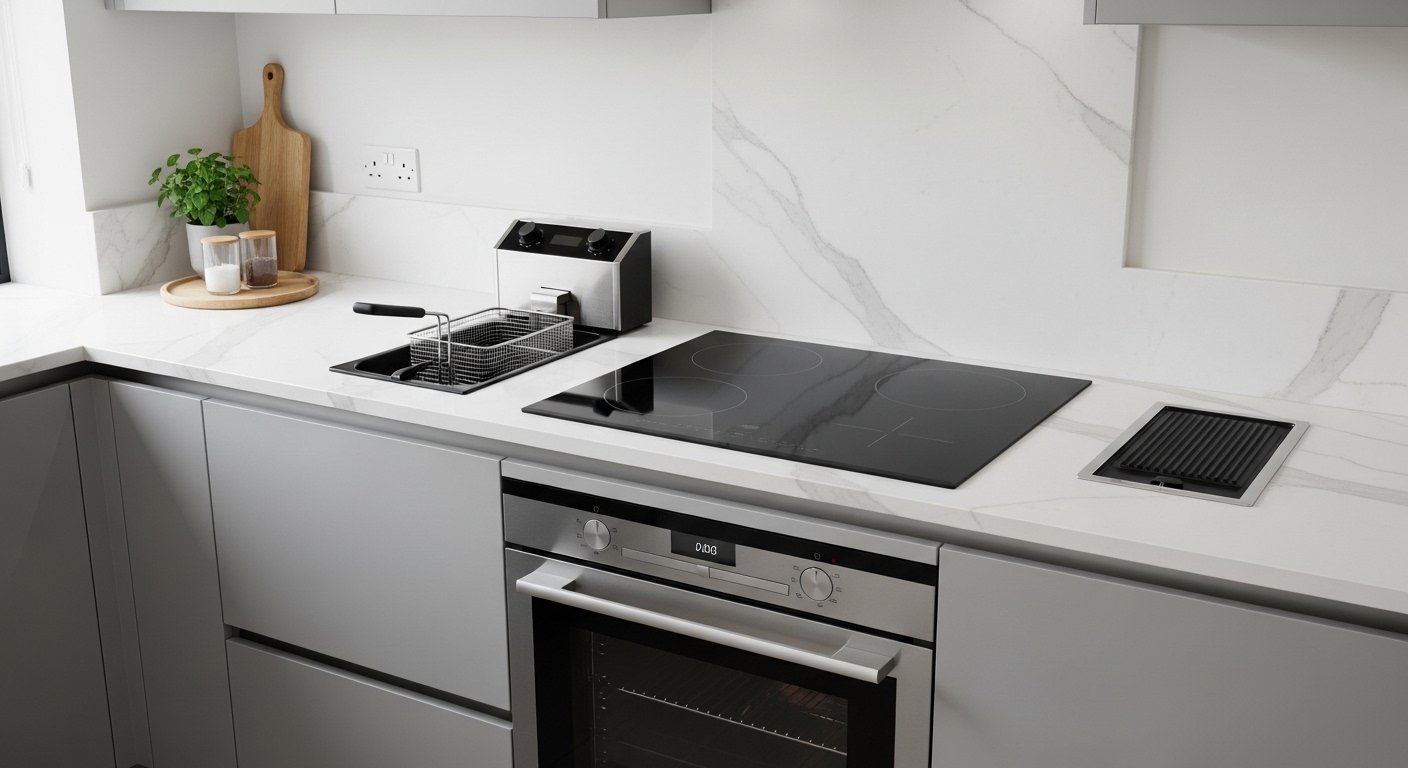
Buying Guide for Built-in Deep Fryers
Selecting the right built-in deep fryer is not a superficial appliance decision—it directly affects cooking efficiency, kitchen workflow, long-term costs, and overall user experience. A well-chosen unit integrates seamlessly into your kitchen while delivering consistent frying performance over years of use. This is why a structured built-in deep fryer buying guide is essential rather than relying on surface-level specifications or brand assumptions.
Modern kitchens in Pakistan are increasingly shifting toward built-in solutions. This shift is driven by space optimization, cleaner aesthetics, and the need for appliances that can handle frequent, high-intensity cooking. Whether you are upgrading your kitchen or building from scratch, understanding how to evaluate a modern kitchen appliance like a built-in fryer ensures you make a decision aligned with both performance and practicality.
This guide breaks down the critical selection criteria, compares different model tiers, and explains how to identify the best value based on real usage scenarios.
Features to Consider
Choosing the right fryer begins with understanding the features that directly impact performance, usability, and long-term reliability. Not all specifications are equally important—some have a measurable effect on cooking results, while others are secondary enhancements.
One of the most critical factors is temperature control precision. A high-quality fryer should maintain stable heat levels without frequent fluctuations. Inconsistent temperature leads to uneven frying, excessive oil absorption, and poor food texture. Advanced models offer digital thermostats that allow precise adjustments, making them more reliable for varied cooking needs.
Oil capacity is another defining feature. The size of the fryer should match your cooking volume. Smaller households may benefit from compact units, while larger families or frequent hosts require higher-capacity fryers to avoid repeated cooking cycles. Capacity directly influences efficiency, especially in high-demand kitchens.
Build quality also plays a central role. Stainless steel interiors and heat-resistant components ensure durability under constant exposure to high temperatures and oil. A robust build minimizes wear and reduces the likelihood of mechanical issues over time.
Filtration systems are increasingly becoming a key differentiator. Built-in oil filtration helps remove food particles, extending oil life and maintaining consistent flavor. This feature is particularly valuable in Pakistani kitchens where frying is frequent and oil reuse is common.
Safety features must not be overlooked. Overheating protection, automatic shut-off mechanisms, and secure lid systems significantly reduce risks. These elements contribute to a safer cooking environment and are often highlighted in top-rated fryer reviews.
Ease of cleaning is another practical consideration. Removable components, smooth internal surfaces, and accessible drainage systems simplify maintenance. Appliances that are difficult to clean often lead to inconsistent upkeep, which negatively impacts performance.
These features to look for collectively determine how well the fryer will perform in real-world conditions.
How Do You Choose the Best Built-in Deep Fryer?
Selecting the best fryer requires aligning appliance capabilities with your specific kitchen needs. The process involves evaluating usage frequency, available space, and cooking preferences.
For households that fry food occasionally, a compact and straightforward model may be sufficient. In contrast, kitchens with frequent frying demands require a more advanced appliance with higher capacity and better temperature control.
Kitchen layout also influences the decision. Built-in fryers must integrate seamlessly into the countertop without disrupting workflow. Placement should allow easy access while maintaining safe distances from other appliances.
Another important factor is energy efficiency. Efficient models consume less electricity while maintaining performance, reducing long-term operating costs. This becomes increasingly important in environments with rising energy prices.
Ultimately, the best choice is one that balances performance, durability, and cost while fitting naturally into your kitchen setup.
Comparing Models and Prices
The built-in fryer market can be broadly divided into entry-level, mid-range, and premium categories. Each tier offers a different balance of features, performance, and cost.
Entry-level models focus on essential functionality. They provide basic temperature control and standard capacity, making them suitable for occasional use. While they are more affordable, they may lack advanced features such as filtration systems or precise digital controls.
Mid-range models represent the most balanced option for many households. They combine reliable performance with additional features like improved temperature regulation, better build quality, and moderate oil capacity. These models often deliver the best combination of cost and usability.
Premium fryers are designed for high-performance cooking environments. They include advanced features such as digital interfaces, integrated filtration systems, and enhanced safety mechanisms. These models are ideal for users who prioritize performance and convenience but come at a higher cost.
Understanding these categories helps in making an informed appliance comparison guide rather than focusing solely on price.
Budget vs Premium Options
The decision between budget and premium models depends on usage patterns and long-term expectations. Budget options may appear attractive initially, but they often lack the durability and efficiency required for frequent use.
Premium models, while more expensive, offer better performance, longer lifespan, and enhanced safety features. They are particularly beneficial for users who cook regularly and require consistent results.
However, not all users need premium features. For moderate usage, a mid-range model often provides the best value. It delivers reliable performance without the additional cost of high-end enhancements.
Evaluating budget vs premium appliance options requires considering both immediate cost and long-term value.
Top-Rated Appliances
Top-rated built-in deep fryers consistently share certain characteristics. They provide stable temperature control, efficient heating, and durable construction. User feedback often highlights ease of use and low maintenance requirements as key factors in high ratings.
These appliances also tend to include thoughtful design elements, such as intuitive controls and efficient oil management systems. Such features enhance usability and contribute to positive kitchen appliance selection experiences.
Reliability is another defining trait. Models that maintain performance over time without frequent repairs naturally receive better reviews and higher user satisfaction.
Exploring top-rated appliances helps identify models that have been tested and validated by real users.
Are Premium Models Worth It?
Premium built-in deep fryers justify their cost through enhanced performance and durability. They are particularly valuable in kitchens where frying is a regular activity.
Advanced features such as precise temperature control, faster heating, and integrated filtration systems improve both efficiency and cooking quality. These benefits translate into better food results and reduced maintenance effort.
However, for users with limited usage, the additional cost may not provide proportional benefits. In such cases, mid-range models offer a more practical solution.
Determining whether premium models are worth it depends on how frequently the appliance will be used and the level of performance required.
Which Models Are Affordable?
Affordable built-in fryers are available across different categories, but affordability should not come at the expense of essential features. A good budget model should still offer stable temperature control, adequate capacity, and basic safety features.
Comparing multiple options within the same price range helps identify the best value. Looking beyond the price tag to evaluate performance and durability ensures a more informed purchase.
Affordable models are ideal for users seeking functionality without extensive features, especially in smaller kitchens or occasional-use scenarios.
How Do You Compare Options Effectively?
Effective comparison involves analyzing both technical specifications and real-world performance. While specifications provide a baseline, user feedback offers practical insights into how the appliance performs over time.
Comparing factors such as energy efficiency, maintenance requirements, and build quality provides a more complete picture. It is also important to consider installation requirements, as built-in appliances must fit seamlessly into the kitchen layout.
Using a structured approach to comparison ensures that the chosen model meets both functional and practical requirements.
Smart Purchase Tips
Making a smart purchase involves more than selecting the right model. It requires considering installation, maintenance, and long-term usability.
Ensuring proper installation is critical for performance and safety. Poor installation can lead to inefficiencies and potential hazards, regardless of the appliance’s quality.
Maintenance requirements should also be evaluated before purchase. Choosing a model that is easy to clean and maintain reduces effort and extends the appliance’s lifespan.
Buyers should also consider warranty and after-sales support. Reliable support ensures that any issues can be resolved quickly without significant inconvenience.
For deeper insights, exploring related resources such as Reviews and Price guides provides additional context for decision-making.
The Role of a Built-in Deep Fryer in a Modern Kitchen
A built-in deep fryer is more than just a cooking appliance—it is part of a broader kitchen ecosystem. Its integration affects workflow, efficiency, and overall cooking experience.
In modern kitchens, appliances are selected not only for performance but also for how they fit into the overall design and usage pattern. A well-chosen fryer enhances both functionality and aesthetics.
Understanding this broader role helps buyers make decisions that align with their long-term kitchen goals.
Conclusion
Choosing the right built-in deep fryer requires a detailed evaluation of features, performance, and cost. A structured built-in deep fryer buying guide ensures that decisions are based on practical needs rather than assumptions.
By focusing on critical factors such as temperature control, capacity, build quality, and safety, buyers can identify models that deliver consistent performance. Comparing different categories and understanding the trade-offs between budget and premium options further refines the selection process.
Ultimately, the best fryer is one that integrates seamlessly into your kitchen, meets your cooking requirements, and provides long-term reliability. With the right approach, this appliance becomes a valuable addition to any modern cooking space.