
Why Do Chefs Prefer Steel Hobs for Professional Cooking?
Step into any professional kitchen — whether a high-end restaurant, hotel cooking line, or catering setup — and you will notice one common element: steel dominates the cooking environment. From countertops to prep stations and cooking equipment, stainless steel is the material of choice. This preference is not accidental. It is based on performance, durability, heat control, and reliability under pressure.
So when it comes to cooktops, why do chefs consistently prefer steel hobs for professional cooking?
The answer lies in flame intensity, structural strength, heat distribution, ergonomic design, and long-term durability. Professional cooking demands consistency, speed, and resilience. A steel hob is built to deliver exactly that.
Understanding this preference requires analyzing performance features, flame control precision, durability engineering, and real-world cooking demands.
Chef-Preferred Steel Hobs: Built for Demanding Environments
Professional kitchens operate under conditions far more intense than residential ones. Burners run continuously for hours. Heavy pots are lifted and dropped repeatedly. Flames are turned to maximum output frequently. Cooking speed is critical. Equipment failure is not an option.
Steel hobs are designed with these stress factors in mind.
Unlike fragile surfaces that prioritize appearance, a chef-grade steel hob prioritizes mechanical strength and thermal resilience. The stainless steel body resists cracking under impact. It tolerates rapid temperature shifts. It withstands daily exposure to oil splatter, water spills, and high heat without structural compromise.
In restaurant cooking environments, functionality outweighs aesthetics. Steel supports that priority.
Performance Features That Matter in Professional Cooking
Performance is not a marketing word in professional kitchens — it is measurable. Chefs evaluate cooktops based on flame output, responsiveness, recovery time, and control precision.
A steel hob often includes heavy-duty brass burners capable of generating strong, stable flames. High flame output is essential for rapid boiling, stir-frying, and searing. Equally important is the burner’s ability to maintain flame stability under continuous use.
Fast heating is another factor. When a chef places a pan on the burner, heat must transfer immediately and evenly. Steel hobs, paired with cast iron pan supports and efficient burner ports, allow direct heat transfer without energy loss.
Steel cooktop performance is defined by responsiveness. When a chef adjusts the knob, the flame reacts instantly. That precision ensures sauces do not overcook and proteins are seared correctly.
Speed, control, and consistency define professional-grade equipment.
Flame Control: The Core of Professional Cooking
Flame control separates amateur cooking from professional execution. In high-pressure kitchen environments, chefs constantly adjust flame levels to manage cooking stages.
Steel hobs provide precise flame control through well-calibrated gas valves and burner port alignment. The flame must respond proportionally to knob adjustments — not jump erratically between low and high.
High flame is necessary for techniques like:
- Searing meats
- Deep frying
- Wok cooking
- Rapid boiling
Low, controlled flame is equally important for:
- Simmering sauces
- Slow cooking
- Maintaining heat without burning
A professional steel hob allows both extremes without instability.
For deeper understanding of burner responsiveness and output variation, a detailed Flame Control Guide can help explain how valve engineering affects cooking accuracy.
Even Heating: Why Distribution Matters
Uneven heat creates uneven food texture. In professional cooking, that inconsistency is unacceptable.
Steel hobs equipped with high-quality brass burners distribute flame evenly across the pan base. The burner ports are engineered to create symmetrical flame patterns, preventing hot spots.
Cast iron grates play a role here as well. Their weight and density stabilize cookware and help retain heat evenly beneath the pan.
Even heating supports:
- Balanced sautéing
- Uniform browning
- Controlled reduction
- Consistent frying
In restaurant kitchens, where multiple dishes are prepared simultaneously, this reliability is critical.
Durability: The Professional Standard
Durability is arguably the most important reason chefs prefer steel hobs.
Professional kitchens involve:
- Heavy cookware
- Frequent repositioning of pots
- Continuous flame exposure
- Aggressive cleaning cycles
A steel hob is structurally equipped to handle this environment.
Stainless steel resists corrosion from moisture and cleaning chemicals. It does not crack under heavy impact. It maintains structural alignment despite thermal expansion.
Cast iron pan supports withstand significant weight without bending. Brass burners resist heat erosion and maintain flame port integrity over time.
This commercial build quality ensures long-term reliability.
Commercial-Grade Construction vs Residential Design
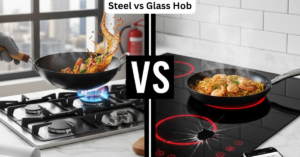
Many glass hobs are designed with aesthetics in mind. They perform well in controlled environments but may not tolerate heavy mechanical stress as effectively.
In contrast, a commercial steel hob is engineered for function-first design. Its frame, burners, and supports are reinforced to endure repetitive high-intensity use.
This is why steel is dominant in professional kitchens worldwide.
For those comparing materials specifically from a chef’s perspective, Glass vs Steel for Chefs explores structural differences more thoroughly.
Ergonomic Controls and Workflow Efficiency
Professional kitchens operate on speed and coordination. Ergonomic knob placement and intuitive control design reduce cooking errors and improve workflow efficiency.
Steel hobs often feature front-mounted controls that are easily accessible. Knobs are spaced to prevent accidental adjustments.
Burner layout also affects workflow. Proper spacing allows chefs to move large pots without collision. Efficient kitchen workflow reduces tipping risk and improves safety.
Performance is not just about flame — it is about how the equipment integrates into daily operation.
Are Steel Hobs Faster?
One of the common questions is whether steel hobs are faster than other types.
Speed depends on burner power, not surface material alone. However, steel hobs frequently come equipped with high-output burners that are optimized for strong flame generation.
Because steel surfaces tolerate intense heat, manufacturers can design burners with higher power output without risking surface damage.
The result is faster boiling, quicker heat response, and improved cooking efficiency.
Do Chefs Avoid Glass Hobs?
Chefs do not necessarily “avoid” glass hobs, but professional kitchens prioritize durability and impact resistance.
Glass surfaces may crack if heavy cookware is dropped. Steel surfaces are more forgiving under mechanical stress.
In high-pressure environments, the risk tolerance for breakage is extremely low. Steel offers greater structural assurance.
Strength Under Heavy Cookware
Professional cooking involves heavy stockpots, industrial-sized pans, and full-capacity pressure cookers. A chef-grade hob must support substantial weight without flexing.
Steel hobs with reinforced frames and cast iron grates distribute weight evenly. This stability prevents wobbling and reduces spill risk.
Strength contributes directly to cooking safety and efficiency.
For households seeking similar heavy-duty performance, exploring Heavy-Duty Steel Hobs can provide options designed for demanding cooking needs.
Heat Resistance and Longevity
Heat exposure in professional kitchens is constant. Burners may operate for several hours without shutdown.
Steel’s heat resistance allows it to maintain structural integrity despite prolonged thermal stress. Unlike materials that may degrade over time under repeated heat cycles, stainless steel retains strength and surface stability.
Longevity reduces replacement frequency, making steel a cost-effective choice in commercial settings.
Hygiene and Maintenance in Professional Kitchens
Professional kitchens follow strict hygiene standards. Stainless steel is non-porous and easy to sanitize. It does not absorb liquids or odors.
Cleaning chemicals used in restaurants are often stronger than household cleaners. Steel tolerates these without surface damage.
Maintenance efficiency supports operational hygiene compliance.
The Psychological Factor: Reliability Under Pressure
Beyond technical features, there is a psychological reason chefs prefer steel hobs.
In professional cooking, reliability builds confidence. Chefs trust equipment that performs predictably under stress. Steel hobs have built that reputation over decades in commercial kitchens.
When equipment does not fail, workflow remains uninterrupted.
Final Assessment: Why Steel Dominates Professional Kitchens
Chefs prefer steel hobs because they deliver what professional cooking demands:
- High flame performance
- Precise flame control
- Even heat distribution
- Structural strength under heavy cookware
- Long-term durability
- Ergonomic workflow integration
- Reliable commercial-grade construction
In environments where performance directly affects food quality and service speed, steel provides the structural and thermal stability required for excellence.
Whether in a restaurant or a serious home kitchen, a chef-grade steel hob represents strength, precision, and reliability — the core attributes of professional cooking equipment.