

Glass Hob Safety & Troubleshooting: Smart Ways to Prevent Damage and Fix Issues
Glass hobs are popular in Karachi because they look modern, wipe clean quickly, and fit well in compact built-in kitchens. But the same reasons people love them—smooth surface, touch controls, sensors—also create new questions: Are glass hobs safe? What if the hob overheats? Why does the glass crack? What do fault codes mean? And when should you stop trying DIY fixes and call a professional?
This guide on glass hob safety & troubleshooting is written for Pakistani households and Karachi cooking patterns, where daily use is heavy (tarka, frying, milk boil-overs) and where electrical stability can vary. You’ll get practical glass hob safety tips, understand common issues like hob cracks, hob overheating, hob sensor fault, hob fault codes, and learn safe steps like emergency shutoff, hob fuse checks, hob fault reset, and the proper hob repair process.
By the end, you’ll know what you can check yourself, what you should never attempt at home, and how Xpert Appliances can support you when the fault is beyond basic troubleshooting.
Glass hob safety & troubleshooting
If you want a simple framework for safe ownership, remember this:
- Use the hob in a controlled way (heat + cookware + spills)
- Treat faults as signals, not inconveniences
- Reset only when it is safe, and escalate early for electrical or glass damage
That approach keeps your glass hob safety strong and reduces the risk of repeat failures.
Everyday safety measures
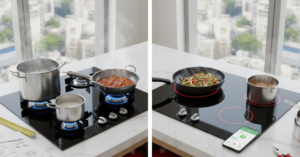
1) Keep the surface clear and stable before cooking
Safety starts before you even turn it on.
- Remove plastic items, cloth, or packaging near the hot zone
- Keep utensils away from touch controls (accidental activation happens)
- Use cookware with a flat base and stable balance (especially on electric/induction)
This prevents tipping and reduces overheating stress.
2) Avoid thermal shock and “panic wiping”
In Karachi kitchens, it’s common to wipe quickly during cooking. The risk is wiping a very hot surface with a cold wet cloth, or splashing cold water to “cool it down.”
Thermal cutoff and safety clear rule:
- Let the zone cool for a few minutes before wet wiping
- Use a warm damp cloth instead of a cold soaked cloth
- Never pour water on a hot hob zone
This reduces thermal stress and helps prevent hob cracks.
3) Use child lock hob features in family homes
People often ask how to use child lock on a hob. Most modern electric/induction hobs have a lock icon or a “key” function.
Hob child lock guide (general behavior):
- Activate before cleaning the control area (avoids accidental beeps and activation)
- Use it when kids are around or when the hob is cooling but still warm
- If the hob beeps and won’t respond, check if the child lock is enabled
Because models differ, always confirm the exact lock method in your manual, but the habit is universal: use the lock as a safety barrier, not as an afterthought.
4) Know emergency shutoff habits (Karachi practical)
If something feels wrong—smell, smoke, unusual heat, sparking, or a crack—the correct response is fast and calm.
Emergency shutoff basics:
- Turn off the hob from its controls (if responsive)
- Switch off the relevant breaker at the DB (distribution board)
- For gas hobs, close the gas valve immediately
- Keep the area clear and ventilated
This is not “overreacting.” It is correct glass hob safety behavior.
5) Respect hob auto shutoff and safety sensors
Many hobs have hob auto shutoff behavior (or thermal limits). Users sometimes think it’s a “fault,” but it can be protection.
Common triggers:
- Pan removed from zone (induction)
- Overheating protection due to blocked ventilation
- Long unattended cooking at high power
If the hob is shutting off regularly, treat it as a clue to check airflow, cookware, and usage patterns.
Common faults and quick checks
This section is your safe troubleshooting guide. The goal is not to “fix everything yourself,” but to identify the cause quickly and avoid unsafe experimenting.
1) Hob won’t turn on
Quick checks:
- Check the breaker and hob fuse (if your setup has a fused spur/isolator)
- Confirm the wall switch/isolator is ON
- If the touch panel lights up but doesn’t respond, check child lock hob status
- If power is unstable in your area, wait and retry once power is stable
If the breaker trips again after resetting, stop and move to electrical-trip checks.
2) The hob trips electricity (electrical trip causes)
In Pakistan, electrical trips are common when:
- a circuit is overloaded
- earthing is weak
- moisture enters the connection area
- there is an internal short or sensor failure
Safe response:
- Do not keep flipping the breaker repeatedly
- Unplug/turn off at isolator, let it sit, then attempt one controlled restart
- If it trips again, book a service appointment
Repeated trips can worsen damage and increase risk.
3) Hob overheating (hob overheating)
Hob overheating is usually caused by:
- blocked airflow (especially in built-in setups)
- undercounter clearance issues
- ventilation hood not extracting heat
- cookware that doesn’t match the zone properly
- running high power continuously in hot ambient weather
Quick checks:
- Ensure vents are not blocked
- Remove anything stored under the hob that restricts airflow
- Let it cool fully and try again at moderate power
- Confirm a pot isn’t too small or badly centered for the zone (electric/induction)
Overheating can trigger a thermal cutoff, which is a protective shutdown. Frequent overheating needs a deeper check.
4) Hob sensor fault (hob sensor fault)
Sensors manage temperature, pan detection (induction), and safety shutdowns.
Typical signs of sensor failures:
- the hob turns off randomly
- zones won’t detect pans properly
- power fluctuates without changing settings
- error codes appear repeatedly
Safe action:
- Try a single hob reset (explained below)
- Confirm cookware compatibility (especially induction)
- If the fault returns, do not keep forcing it—book a service appointment
5) How to reset a hob (hob reset / hob fault reset)
People ask, “How to reset a hob?” The safest general approach is a power-cycle reset.
Hob fault reset steps (safe general method):
- Turn off the hob from its control panel
- Switch off the isolator or breaker
- Wait 5–10 minutes (allows internal protection to clear)
- Switch on and test one zone at a moderate setting
If the issue is persistent, resetting repeatedly will not “solve” a real hardware fault—it only delays proper repair.
What causes cracks & how to avoid
Cracks are a major concern because they affect safety and may require panel replacement. This section answers the most asked question: “What causes hob glass to crack?”
Common causes of hob cracks
- Dropping heavy cookware or lids (impact)
- Dragging heavy pots across the surface (stress + micro-damage)
- Uneven installation or pressure points (mounting clips too tight, cutout uneven)
- Spilled sugar crack scenario (sugar syrup/caramel burning hard onto the hot surface)
- Thermal shock (cold water/cloth on a very hot zone)
- Existing micro-cracks spreading over time
Can sugar spill crack a glass hob?
Sugar spills are more dangerous than most people realize. When sugar melts and burns on a hot zone, it can bond strongly and create stress during removal. Scraping it aggressively while the surface is extremely hot can also worsen damage.
Safer habit:
- Turn off the zone immediately
- Let it cool slightly, then remove carefully using a hob-safe scraper tool
- Avoid “hard chipping” with metal utensils
This prevents surface damage and reduces the chance of cracks spreading.
Fix glass hob crack: what is safe to do at home?
If there is a visible crack:
- Stop using that zone immediately
- Use emergency shutoff steps if needed
- Do not apply “patches” and continue cooking (heat cycles + pressure can worsen the crack)
- Arrange inspection and discuss repair options
A cracked glass hob is not a cosmetic issue—it is a safety issue.
Error codes & what they mean
Most electric and induction hobs show hob fault codes when protection triggers or when the system detects an issue. Code formats vary by brand, but the underlying meaning is usually one of these categories:
1) Overheating / thermal cutoff related codes
- Often appears after long high-power cooking or blocked ventilation
- Solution: cool down fully, check ventilation, reduce continuous high settings
2) Sensor fault codes
- Relates to temperature sensors or pan-detection sensors
- Solution: cookware check (induction), single reset, then service if repeated
3) Electrical supply / voltage irregularity codes
- Can happen during voltage fluctuation
- Solution: stabilize power, avoid repeated resets, check wiring and grounding if recurring
4) Control panel / touch error codes
- Moisture or residue on touch panel can trigger errors
- Solution: dry clean the panel area, enable child lock before cleaning next time
If codes keep returning, that’s your signal to move from DIY checks to the hob repair process with a technician. Error codes are a protective language, not a mystery to ignore.
Conclusion
Good glass hob safety & troubleshooting is a combination of smart daily habits and calm fault handling. Use child lock when needed, respect ventilation and heat limits, and treat repeated shutdowns, hob fault codes, hob overheating, or hob sensor fault signs as reasons to investigate—not to ignore. Most importantly, if you see hob cracks, handle emergency shutoff properly and stop using the affected zone until it’s inspected.
If you want dependable support in Karachi—whether it’s diagnosis, safe repair, or guidance on the right model—Xpert Appliances can help you follow a proper hob repair process and keep your kitchen safe long-term.
FAQs (People Also Ask)
1. Are glass hobs safe to use?
Yes, modern hobs are designed with safety sensors, thermal cutoff protection, and often hob auto shutoff features. Glass hob safety depends on correct installation, proper ventilation, safe cookware use, and avoiding thermal shock. When faults occur, respond calmly with emergency shutoff steps and do not ignore repeat issues.
2. What causes hob glass to crack?
Cracks typically come from impact (dropped pots), thermal shock (cold water/cloth on hot surface), uneven installation pressure, dragging heavy cookware, and stress from burnt-on residues like sugar. Prevent cracks by lifting cookware, wiping safely, and keeping the hob properly supported and ventilated.
3. Can sugar spill crack a glass hob?
Sugar can create high stress because it melts, burns, bonds hard, and becomes difficult to remove. Aggressive scraping at the wrong time can damage the surface. Turn off the zone, cool slightly, remove carefully with a hob-safe scraper, and avoid hard chipping with metal tools.
4. How to reset a hob?
For a safe hob reset, turn off the hob, switch off the breaker/isolator, wait 5–10 minutes, then restart and test one zone at moderate power. If the fault returns, do not keep resetting—book a service appointment because the issue may be sensor or electrical.
5. How to use child lock on hob?
Most hobs use a lock/key icon or a long-press button method. Use child lock before cleaning the control area to avoid accidental activation and keep it enabled when kids are near the kitchen. If controls don’t respond, child lock may be active—check and unlock per your model’s instructions.