


Built-in BBQ fryers are no longer just about grilling convenience. For many Pakistani households, especially in urban areas like Karachi, they have become a practical indoor cooking solution that must balance performance with rising electricity costs. When used correctly, a built-in BBQ fryer can deliver excellent results while keeping power consumption under control.
This guide explains how to maximize built-in BBQ fryer energy efficiency, reduce electricity waste, and make smarter everyday cooking decisions. Whether you already own a unit or are planning to buy one, this article will help you understand how energy-efficient BBQ fryers actually work, how to use them efficiently, and how they fit into a cost-saving, sustainable kitchen setup.
Built-in BBQ fryer energy efficiency
Built-in BBQ fryer energy efficiency depends on how heat is generated, retained, and used during cooking. Unlike traditional charcoal BBQs or open electric grills, a built-in unit is designed to operate in a controlled indoor environment, which significantly reduces heat loss.
An energy-efficient built-in BBQ fryer uses:
- Focused heating elements
- Insulated cooking chambers
- Optimized power cycles
This allows food to cook evenly without drawing unnecessary electricity. For Pakistani kitchens where voltage fluctuations and high unit rates are common, reduced electricity use is not just a feature—it is a necessity.
When used properly, a low-power indoor fryer can consume less energy than a standard electric stove burner while delivering better grilling results.
Benefits of Energy-Saving Appliances
Choosing an energy-saving appliance goes beyond lowering bills. It improves overall kitchen efficiency and long-term reliability.
Key benefits of an energy-efficient BBQ fryer
- Electricity cost reduction during daily cooking
- More stable performance during load-shedding or voltage drops
- Lower heat emission, keeping kitchens cooler in summer
- Longer appliance lifespan due to controlled power usage
For families in Karachi, where appliances are often used multiple times a day, an electricity-saving fryer helps maintain predictable monthly utility expenses.
An eco-friendly appliance also aligns with a growing shift toward energy-conscious appliance use in Pakistan, where electricity conservation is becoming increasingly important.
Comparing Power Consumption of Built-in BBQ Fryers
Not all built-in BBQ fryers are the same. Power consumption varies depending on design, heating technology, and insulation quality.
What affects indoor BBQ electricity usage?
- Heating element wattage
- Cooking surface material
- Heat retention capability
- Preheating time
A modern kitchen appliance designed with efficiency in mind will often require shorter cooking times, which directly translates into low electricity cooking.
Compared to open grills or conventional electric fryers, an efficient built-in fryer:
- Uses steady, optimized power instead of spikes
- Avoids continuous reheating
- Maintains consistent internal temperature
This makes it a sustainable cooking appliance for indoor use.
Tips to Reduce Electricity Usage While Using a Built-in BBQ Fryer
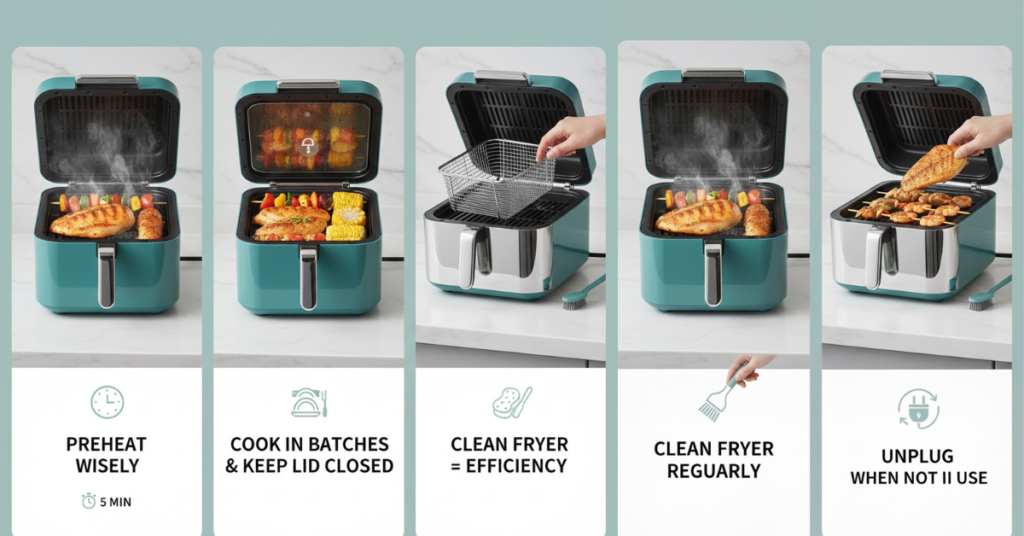
Use preheating wisely
Preheat only for the recommended time. Over-preheating wastes power without improving results.
Cook in batches
Avoid repeated start-stop cycles. Cooking multiple portions together improves indoor BBQ energy efficiency.
Keep the lid closed
Heat retention is critical. Opening the lid repeatedly increases electricity draw.
Match food size to cooking surface
Oversized food forces longer cooking times and higher energy use.
Clean the fryer regularly
Grease buildup reduces heating efficiency and increases power consumption.
These small habits significantly improve kitchen power saving without compromising food quality.
Combining Built-in BBQ Fryers with Other Energy-Efficient Appliances
A sustainable kitchen is not built around a single appliance. Pairing your BBQ fryer with other efficient cooking appliances enhances overall energy savings.
Recommended combinations:
- Energy-efficient range hoods with proper airflow
- Induction cooktops for quick side dishes
- LED kitchen lighting to reduce ambient power usage
This integrated approach supports modern appliance efficiency while improving everyday cooking convenience.
For homeowners upgrading kitchens in Karachi apartments or newly constructed houses, this combination creates a balanced, low-electricity cooking environment.
Long-Term Cost Savings of Energy-Efficient BBQ Fryers
Reduced monthly electricity bills
Lower wattage and shorter cooking cycles directly impact household expenses.
Lower maintenance costs
Efficient power use reduces stress on internal components.
Better resale and durability
Energy-efficient models retain value longer.
Over time, a cost-saving BBQ solution offsets its initial investment by delivering consistent performance with controlled electricity use.
This makes an electricity-saving BBQ fryer a practical financial decision, not just a lifestyle upgrade.
How This Knowledge Helps You Choose the Right Built-in BBQ Fryer
Understanding built-in BBQ fryer energy efficiency allows buyers to:
- Compare models based on real usage, not just features
- Choose appliances suitable for Pakistani electricity conditions
- Make informed decisions that balance performance and cost
This is where MENAS Xperts step in—offering built-in BBQ fryers designed specifically for efficient indoor cooking, local power conditions, and long-term reliability.
When information leads to clarity, clarity leads to confident purchasing decisions.
Conclusion
A built-in BBQ fryer is more than a cooking appliance—it is a long-term kitchen investment. By focusing on energy-efficient usage, smart cooking habits, and appliance integration, households in Pakistan can enjoy flavorful indoor BBQ while keeping electricity costs under control.
Choosing an efficient built-in fryer, using it correctly, and pairing it with other energy-saving appliances transforms everyday cooking into a sustainable, cost-effective experience.
If your goal is performance without power waste, an energy-efficient built-in BBQ fryer is the right direction forward.
FAQ
Are built-in BBQ fryers energy efficient?
Yes, when designed correctly and used properly, built-in BBQ fryers are more efficient than open grills and traditional electric fryers due to better heat retention and controlled power usage.
How much electricity do built-in BBQ fryers use?
Electricity usage depends on wattage and cooking time. Energy-efficient models are designed to minimize consumption by maintaining consistent heat instead of repeated reheating.
Can I save on energy bills using a built-in BBQ fryer?
Yes. Using an energy-efficient built-in BBQ fryer can reduce cooking-related electricity costs, especially when replacing high-power stoves or grills.
Which built-in BBQ fryer models consume the least power?
Models designed with insulated chambers, optimized heating elements, and modern controls typically consume less electricity while maintaining performance.
Are eco-friendly built-in BBQ fryer options available in Pakistan?
Yes. Many modern units now focus on eco-friendly indoor BBQ solutions that align with energy-conscious cooking needs in Pakistan.