How to Clean a Steel Hob Without Damaging the Surface?
A steel hob is one of the most practical choices for Pakistani kitchens. It handles heavy karahis, constant frying, high heat, pressure cooking, and daily use without complaint. But while steel is strong, its surface can easily lose its shine if cleaned the wrong way.
Many people assume stainless steel cleaning requires strong chemicals or aggressive scrubbing. In reality, most scratches, dull patches, and permanent stains happen because of incorrect cleaning methods — not because of cooking itself.
If you want your hob to stay smooth, hygienic, and visually premium for years, you need the right hob cleaning tips and a proper hob maintenance routine. This guide explains how to clean steel hob surfaces safely, how to remove grease hob stains properly, and what to avoid so you don’t accidentally damage the finish.
Whether your kitchen sees light cooking or daily heavy desi meals, this method works.
How to Clean Steel Hob (The Right Way)
Cleaning a steel hob is about consistency, not force. In Karachi, Lahore, and other cities where cooking includes oil-rich gravies, tadka, frying, and spice-heavy dishes, grease buildup is natural. The mistake happens when people try to remove that grease aggressively.
A proper hob cleaning routine includes:
- Light daily wiping
- Safe degreasing when needed
- Occasional polishing
- Avoiding abrasive tools
- Using safe cleaning solutions
When done correctly, daily hob cleaning takes only a few minutes and prevents long-term damage.
Supplies Needed
Before starting, gather the right tools. Using the wrong cloth or cleaner is one of the biggest causes of avoidable surface damage.
You’ll need:
- Mild dish soap (to create a gentle soap solution)
- Warm water
- A microfiber cloth
- A soft non-abrasive sponge
- White vinegar (for degreasing when necessary)
- A dry soft towel
- Optional: food-safe steel polish hob solution
What you should NOT use:
- Steel wool
- Hard metal scrubbers
- Abrasive cleaning powders
- Bleach
- Acid-based cleaners
- Harsh degreasers
Even though steel feels tough, its brushed finish can develop micro-scratches easily. Once scratched, it becomes harder to keep clean because grease settles inside those tiny lines.
Daily Cleaning Method
Daily cleaning prevents 80% of long-term problems. The key is to clean lightly and regularly instead of waiting for thick grease buildup.
First, always allow the hob to cool completely. Cleaning a hot surface can cause streaking and may warp certain cleaning agents onto the surface.
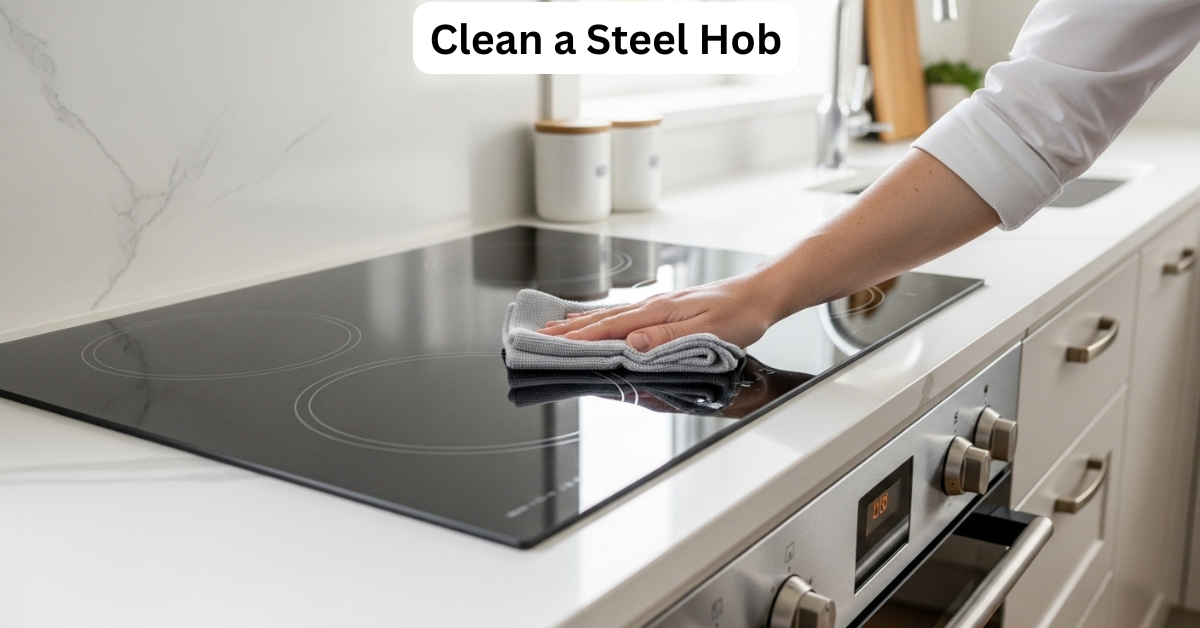
Start by wiping loose crumbs and food particles with a dry microfiber cloth. This prevents dragging debris across the surface while cleaning, which is a common cause of scratches.
Next, dip a soft sponge into a mild soap solution made with warm water. Gently wipe the steel surface following the direction of the grain. Stainless steel has a visible brushing pattern — always clean along that pattern, never against it. Cleaning against the grain increases the risk of visible scratch marks.
After wiping, use a damp clean cloth to remove any soap residue. Soap left behind can create dull streaks once it dries.
Finally — and this is important in Pakistani homes where water is often hard — dry the hob immediately using a clean towel. Water spots are one of the biggest reasons steel loses its shine over time.
This simple daily hob cleaning process usually takes less than five minutes but keeps the surface looking new.
Removing Tough Grease (Without Scratching)
Sometimes daily cleaning isn’t enough — especially after frying fish, cooking karahi, or preparing oily gravies. In those cases, proper degreasing is required.
The mistake most people make is scrubbing harder. Instead, you should soften the grease first.
Vinegar Cleaning Method
Vinegar cleaning is effective when used correctly. It helps break down oil without damaging the steel.
Mix equal parts white vinegar and water. Lightly spray the solution on greasy areas and let it sit for two to three minutes. Do not let it dry or sit for too long.
Wipe gently with a microfiber cloth, rinse with a damp cloth, and dry immediately.
Many people ask: does vinegar damage steel?
No — diluted vinegar used briefly is safe. Problems occur only when undiluted vinegar is left sitting for long periods.
Baking Soda for Stubborn Stains
For thicker grease layers, a mild baking soda paste can help.
Mix baking soda with a small amount of water until it forms a paste. Apply it to the stain and let it sit for about 10 minutes. This helps loosen hardened grease.
Wipe gently using a soft sponge. Never scrape with knives or sharp objects — even if the grease looks stubborn. Scraping causes permanent scratches that can’t be polished away.
Rinse thoroughly and dry the surface completely.
Proper hob stain removal requires patience, not pressure.
Polishing the Steel Surface
Over time, especially in high-use kitchens, the steel surface may appear slightly dull. This doesn’t mean it’s damaged — often it just needs light polishing.
If you want to restore shine:
- Use a food-safe steel polish hob product
- Apply a small amount to a microfiber cloth
- Rub gently in the direction of the grain
- Buff lightly
Polishing should not be a daily practice. Once every few weeks is enough for most homes.
If your hob is maintained properly, polishing becomes optional rather than necessary.
Common Mistakes That Cause Damage
Most steel hob damage doesn’t happen during cooking. It happens during cleaning.
One of the biggest mistakes is using steel wool or metal scrubbers. Even a single aggressive cleaning session can leave permanent scratch marks.
Another mistake is using harsh chemicals like bleach or acidic cleaners. These may remove grease quickly but can discolor the steel and weaken its finish.
Cleaning against the grain is another subtle but common issue. It may not show immediately, but over time it creates visible lines that make the hob look older than it is.
Leaving water sitting on the surface is also harmful. Hard water minerals leave behind residue that reduces shine.
Proper kitchen hob care is more about avoiding these mistakes than about using expensive products.
How to Keep Steel Shiny Long-Term
If you want your clean stainless hob to stay shiny for years, consistency matters more than intensity.
Develop a simple hob cleaning routine:
- Light daily wipe after cooking
- Weekly deeper degreasing
- Immediate drying after cleaning
- Always clean along the grain
- Avoid dragging heavy pots
- Inspect burner rings regularly
In Pakistani kitchens, where cooking frequency is high, maintenance becomes part of daily rhythm. Five minutes of care saves hours of deep cleaning later.
Extra Tip: Managing Burn Marks Around Burners
Burner areas are exposed to direct heat and often develop dark stains.
To manage this:
- Remove burner caps periodically
- Clean them separately
- Wipe around the burner base carefully
- Avoid pouring excessive water into ignition areas
Keeping burner components clean improves both hygiene and performance.
When to Deep Clean Your Steel Hob
Even with daily cleaning, every hob needs occasional deeper cleaning.
You may need deeper maintenance if:
- Grease buildup feels sticky
- Surface looks cloudy
- Water marks don’t wipe off
- Burner rings look discolored
Deep cleaning should still avoid abrasives. It simply involves more thorough degreasing and careful drying.
For full appliance hygiene, it’s also helpful to occasionally review a complete deep cleaning appliances guide — especially if your kitchen sees frequent heavy cooking.
Conclusion
A steel hob is built for durability, but its appearance depends entirely on how you maintain it.
If you clean steel hob surfaces with:
- Mild soap solution
- Proper degreasing methods
- Microfiber cloth
- Gentle wiping technique
- Immediate drying
You will avoid scratches cleaning damage and preserve its original finish.
Steel does not require aggressive chemicals or hard scrubbing. It requires the right method and regular care.
With proper hob maintenance, your steel hob can stay hygienic, efficient, and visually premium for years — even in a high-usage Pakistani kitchen.
FAQs (People Also Ask)
How do you clean a steel hob daily?
Use warm water with mild soap and wipe using a microfiber cloth along the direction of the steel grain. Rinse lightly and dry immediately.
What should you not use on a steel hob?
Avoid steel wool, metal scrubbers, bleach, acidic cleaners, and abrasive powders. These cause scratches and dullness.
How to remove grease stains?
Use diluted vinegar spray or baking soda paste. Let it sit briefly to soften grease before wiping gently.
Does vinegar damage steel?
Diluted vinegar used for a short time is safe. Never soak or leave undiluted vinegar on the surface.
How to keep steel shiny?
Clean regularly, dry after washing, follow the grain direction, and use food-safe steel polish occasionally.